What You Need to Know About Amendment 3
At the Seminole County Chamber, advocating for a strong and thriving business community is one of our top priorities.
The Seminole County Chamber helps our members learn about issues affecting their businesses and our community. We provide a voice of the whole that is greater than the voice of one, to make a difference in creating a thriving business community in Seminole County and Central Florida.
This resource page explains Amendment 3 and the Chamber's position on it. Here, you’ll find information about what the amendment proposes, official ballot language, helpful resources, and information about the potential implications for businesses, local governments, residents, and the broader Central Florida community.
Our goal is to help you understand both the proposal itself and the potential short- and long-term considerations for our region so you can stay informed and make your own decisions.
For questions and more information, please reach out to Rebekah Arthur.
To develop this page, we surveyed the community, reviewed the issue in committees, and with the full Board of Directors.
Seminole County Chamber Opposes Amendment 3
After an intensive review of Amendment 3's potential impacts on the community, the Seminole County Chamber’s board of directors unanimously voted to oppose it.
With this resolution, the Seminole County Chamber joins multiple other business organizations, such as the Orlando Economic Partnership and the Tampa Bay Chamber, in opposing Amendment 3.
“We heard from many members who are significantly concerned about their economic future if this passes,” says Rebekah Arthur, president & CEO, Seminole County Chamber. “While our membership includes many large employers, those with the most concerns were the small businesses and nonprofit organizations that simply could not withstand such a dramatic change in our tax structure.
“Of course, our chamber wants tax relief for our businesses and residents, and we certainly hope the Florida Legislature will revisit this issue carefully and diligently to provide relief,” Arthur added. “This proposal is simply too drastic and too sudden and the effects could seriously hurt Seminole County’s high standards for our quality of life.”
One of the key reasons to oppose are the significant cuts to services that maintain that quality of life. For instance, Seminole County Sheriff Dennis Lemma has stated the amendment could require a 20 percent cut to the Sheriff's Office budget for county residents and businesses. In addition, there are significant concerns about funding for social services and for economic development efforts.
Those efforts have proven to create high-wage jobs that provide customers to the small businesses throughout the county.
“Seminole County has a tremendous record of being a center of technology, particularly fintech, advanced manufacturing, simulation and financial services,” Arthur says. “With costs still rising for businesses throughout the region, now is not the time to stop those very successful efforts.”
The Seminole County Chamber is comprised of more than 800 member businesses located throughout Central Florida. While local governments are members of the chamber, very little additional funding comes from local governments. All board members from local government abstained from the vote.
The Seminole County Chamber ran an online survey of its members and the community. While not a scientific poll, the members who responded overwhelmingly rejected the amendment. In the survey, 91 percent of self-reported members believed it would negatively affect the local economy and 82 percent opposed the Amendment.
The election for Amendment 3 will be held on November 3.
Sheriff Lemma will present to the community at Good Morning Seminole on October 1. Please RSVP here.
What is Amendment 3?
Amendment 3 is a proposed amendment to the Florida Constitution that would change how homestead and non-homestead properties are treated for property tax purposes. If approved by voters, the amendment would increase the homestead exemption for certain property taxes and lower the annual assessment-growth cap for non-homestead properties.
The measure could reduce property taxes for many property owners while also reducing the property-tax revenue that counties, municipalities and certain special districts would otherwise collect. How individual taxpayers and local governments are affected will vary.
What Is On My Ballot for Amendment 3?
Amendment 3 would increase Florida’s homestead exemption for non-school property taxes to $150,000 in 2027 and $250,000 in 2028, with future increases tied to inflation. It would also allow counties, municipalities, and—subject to voter approval—special districts to increase exemptions further, up to the property’s full assessed value.
The amendment would also lower the annual assessment-growth cap on non-homestead property from 10% to 5% and place limits on how counties and municipalities may use property-tax revenue, generally prioritizing public safety, education, infrastructure, natural resources, debt service, employee retirement benefits, and government operations.
New Florida residents after December 31, 2026, would phase into the increased homestead exemption beginning in their fifth year of eligibility. The amendment would take effect January 1, 2027.
READ THE OFFICIAL BALLOT LANGUAGE HERE
This summary is provided for informational purposes only. Voters should review the official ballot language and full constitutional amendment before voting.
How Would This Change Property Taxes?
- Homestead exemption: This amendment would increase the homestead exemption for qualifying properties from around $50,000 to $150,000 in 2027 and to $250,000 in 2028 for non-school levies, then adjusted for inflation
- Non-homestead assessment: An increase in the taxable value of non-homesteaded properties would be capped at 5 percent, compared to the 10 percent today
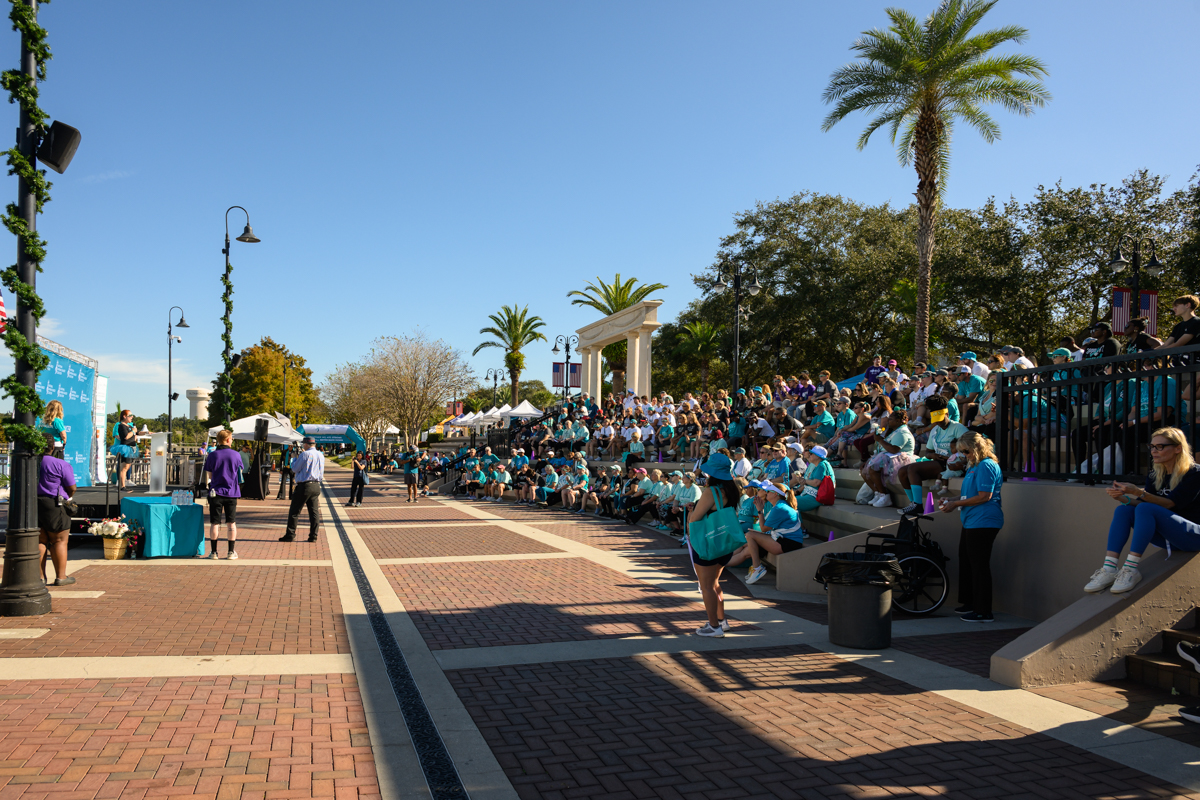
Photo courtesy of Karen Kurta, Karen K Photo
What Could This Mean For You?
Below are some potential considerations for Seminole County homeowners, business & commercial property owners, renters, and local governments to make when considering their vote on Amendment 3.
Homeowners
- Larger homestead exemptions would reduce non-school property taxes for qualifying homeowners.
- The amount of savings would vary based on assessed value, taxing jurisdiction and millage rates.
- School district property taxes would not receive the increased exemption.
- At the same time, homeowners should consider how local governments might respond to changes in property-tax revenue, since no provisions prevent higher property and other taxes.
- Future decisions by local governments could affect the ultimate impact on taxpayers, including millage rates and cutting of public services.
Businesses & Commercial Property Owners
- Non-homestead property would receive a lower annual assessment-growth cap, declining from 10% to 5%.
- This could provide greater predictability or slower growth in taxable assessments for certain commercial properties.
- At the same time, businesses should consider how local governments might respond to changes in property-tax revenue, as there are no provisions preventing higher property taxes.
- Potential responses could include changes to millage rates, fees, assessments, spending, or service levels, subject to applicable law and local decisions.
Renters
- Renters do not directly receive a homestead exemption on rental property, but changes in property taxation can affect the economics of rental properties.
- A lower non-homestead assessment cap could benefit owners of some rental properties, while broader changes in local government revenues or taxes/fees could also indirectly affect renters.
Why This Matters to Seminole County
Seminole County is home to a diverse group of municipalities, businesses, residents and public agencies, each with different tax bases, service needs and economic conditions.
Changes to Florida's property-tax system may affect each community differently.
For businesses, the issue extends beyond the amount paid on a property-tax bill. Local revenues help support infrastructure, public safety, transportation, parks, economic development and other services that contribute to the region's business climate and quality of life.
The Seminole County Chamber encourages voters and business leaders to consider both the direct tax implications of Amendment 3 and its potential long-term effects on the communities in which we live, work, and do business.
Where Do Your Property Taxes Go?
For FY2026, Seminole County property-tax revenue was allocated across countywide government.
Property taxes are a major source of Seminole County revenue. The County’s FY2026 adopted budget includes approximately $562 million in ad valorem property-tax revenue, including the countywide General Fund levy, Fire/Rescue MSTU and Unincorporated Road MSTU.
Seminole County says foundational services, including public safety, transportation, and recreation, rely primarily on property-tax revenue. The countywide property-tax levy supports general government services, while separate property-tax districts support Fire Rescue and roads in the areas they serve.
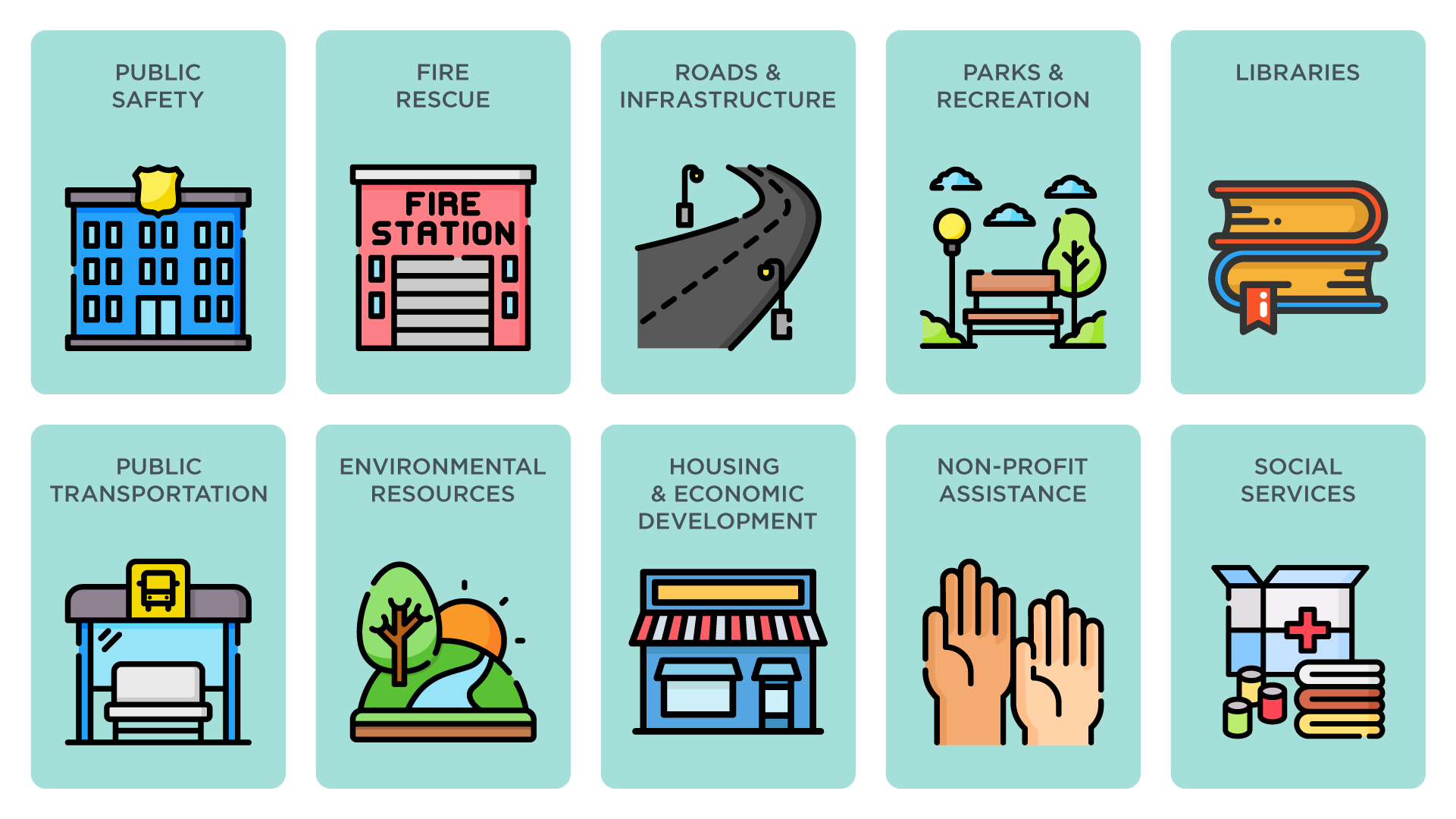
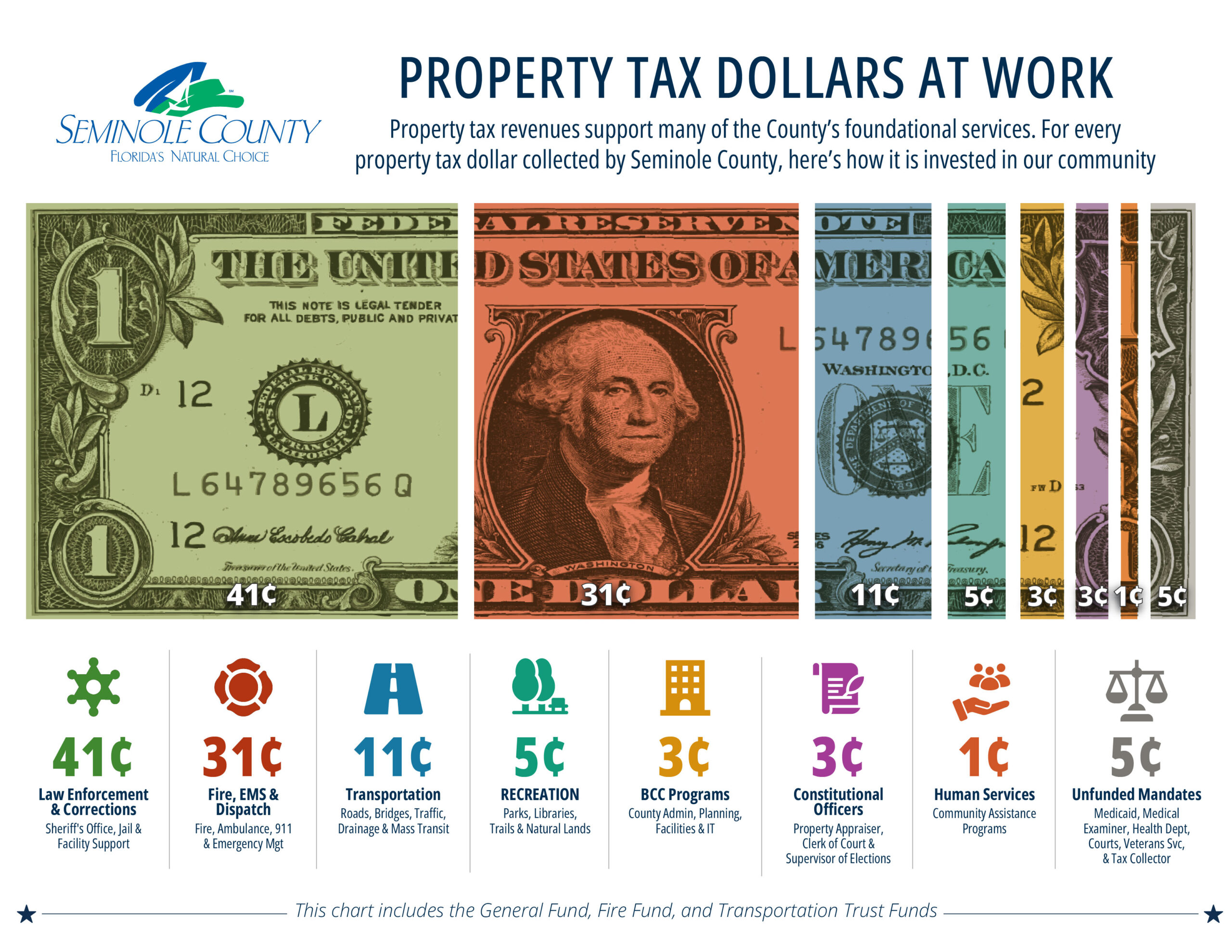
The County’s FY2026 budget provides an especially useful breakdown of where each property-tax dollar goes:
- 72 cents supports public safety, including the Sheriff’s Office, Fire Rescue/EMS, 911 Communications and Emergency Management.
- 11 cents supports transportation, including roads, bridges, traffic, drainage and mass transit.
- The remaining 13 cents supports Parks and Recreation, Constitutional Officers, BCC programs, Human Services and unfunded mandates.
Find the full County Budget here: Seminole County FY2025-26 Adopted Budget
Source: Seminole County Government
What People are Saying About Amendment 3
As voters consider Amendment 3, organizations, elected officials, local governments, business groups, and other stakeholders have raised arguments both supporting and opposing the proposal. The following summarizes some of the most common arguments being made publicly.
Arguments Being Made in Support
Property Tax Relief for Homeowners: Supporters argue that increasing the homestead exemption would provide meaningful tax savings for Florida homeowners. Florida Realtors, for example, says the proposal would provide property-tax relief and support attainable homeownership.
Greater Predictability for Businesses and Other Non-Homestead Properties: Supporters point to the reduction of the annual assessment-growth cap from 10% to 5%, which would limit how quickly the assessed value of commercial, rental, second-home, and other non-homestead properties can increase.
More Money Retained by Property Owners: Supporters argue that reducing property tax allows homeowners to retain more of their income and reduces the ongoing cost of homeownership. Based on Florida TaxWatch's example using the statewide average non-school millage rate, a qualifying home assessed above $250,000 could see substantial savings once the exemption is fully phased in, although actual savings would vary by jurisdiction and property.
Pressure for Greater Government Efficiency: Some supporters view reduced reliance on property taxes as an opportunity for local governments to reevaluate spending, prioritize essential services, and find efficiencies rather than continuing to benefit from rapidly increasing property values.
Improved Housing Affordability: Florida Realtors argues that lowering property-tax costs could help strengthen Florida's commitment to attainable homeownership by reducing the ongoing cost associated with owning a home.
Protection Against Rapidly Rising Assessments: The 5% non-homestead assessment cap would provide commercial and other non-homestead property owners additional protection against large year-over-year increases in assessed value.
Voters Gain Greater Control Over Property Taxation: Supporters can argue that the amendment gives Floridians the opportunity to constitutionally limit the property-tax burden and establishes a process through which exemptions could potentially be expanded further.
Sources:
Arguments Being Made in Opposition
Reduced Local Government Revenue: Opponents point to projections that the amendment would significantly reduce the property-tax revenue available to counties, municipalities, and certain special districts. Florida TaxWatch notes that the amendment does not provide dedicated state funding to replace lost local revenue.
Potential Pressure on Local Services: Public-safety and local-government organizations have raised concerns that reduced revenues could affect governments' ability to fund police, fire rescue, emergency response, infrastructure, parks, libraries, and other services. The extent of any service impacts would ultimately depend on individual local governments and their budget decisions.
Possibility of Higher Millage Rates or Other Fees: Critics argue that local governments may respond to revenue losses by increasing millage rates where legally possible or relying more heavily on fees and other revenue sources. Amendment 3 itself does not prohibit governments from taking those actions.
Potential Shift Toward Business and Renters: Opponents emphasize that renters do not directly receive the expanded homestead exemption. They argue renters could still experience indirect effects if landlords or local governments pass along higher costs through rents, fees, or charges.
Different Communities Could Experience Very Different Impacts: Florida's local governments vary substantially in their reliance on property taxes, existing millage rates, tax bases, and alternative revenue sources. As a result, critics argue that communities with greater dependence on property taxes or less ability to raise other revenue could experience greater fiscal pressure.
Reduced Local Flexibility: Critics argue that the amendment could constrain local governments by reducing their tax base while also placing constitutional restrictions on the purposes for which property-tax revenue may be used.
Sources:
Our Survey Results
From September 14 to 21, the Seminole County Chamber asked interested parties to respond to a survey about their understanding and positions on Amendment 3. This was not a scientific poll and should not be read as a true indication of how Seminole County voters think about Amendment 3.
Respondents were asked to take the survey via email and social media. Over that week, more than 10,000 viewed the social media posts and more than 3,600 people opened an email about the survey.
Overall, more than 200 people took the survey, with 36 percent Seminole County Chamber members.
Respondents' Opinions on Amendment 3
Overall, respondents to this survey were overwhelmingly opposed to Amendment 3. Of the more than 200 respondents, 71 percent said they were strongly or somewhat opposed to Amendment 3, while 24 percent strongly or somewhat supported it.
With verified Chamber members, the number increases to 90 percent with somewhat or strongly opposed to Amendment 3.
Recent scientific polling showed Amendment 3 has 45 percent support statewide, with 30 percent opposed and 25 percent still undecided.
Respondents' Opinions on the Effects of Amendment 3
Our survey showed respondents believe this amendment will have substantial effects on the Seminole County and Central Florida community.
Of the more than 200 respondents, 65 percent believe Amendment 3 will have a significant negative effect on our region, whereas only four percent believe it will have a significant positive effect.
Of verified Seminole County Chamber members, 95 percent believe Amendment 3 will have a negative effect on our region.
Where Do They Stand
Organizations across Florida are choosing to support or oppose Amendment 3. As of September 19, 2026, these are the organizations who support Amendment 3.
Organizations in Favor of Amendment 3

Organizations Against Amendment 3